Hertfordshire Trained Bands
| Flag Illustration | 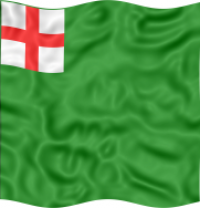 1) 1) |
| Allegiance | Parliament |
| Conflicts | First Civil War |
| Type | Combined |
| Colonels | Sir John Wittewrongg Orange Regiment |
| Sir John Garrard Green Regiment | |
| Colonel Adam Washington Black Regiment | |
| Area Raised | Herefordshire |
| Coat Colour | Blue |
| Breeches Colour | Grey |
| Flag Colours | likely Orange, Green, and Black |
| Flag Design | Unknown |
| Note | flag illustrated is likely the Green Auxiliary Regiment |
- Hertfordshire Trained Band
- Hertfordshire Trained Band Orange Auxiliary Regiment
- Hertfordshire Trained Band Green Auxiliary Regiment
- Hertfordshire Trained Band Black Auxiliary Regiment
Notes
The Hertfordshire Trained Bands of 1638 consisted of 1,500 men armed with 750 muskets and 750 corslets (body armour, signifying pikemen). They also mustered 27 lancers and 53 light horse. Up until the outbreak of the first English Civil War the Hertfordshire Trained Bands of the Militia were effectively one regiment, each company typically being raised from two Hundreds within the county. These companies were mostly well armed with modern weaponry: the militia in Hertford Borough were re-equipped in 1638-9 with new morions, bandoleers, swords and muskets 2)
In March 1640 it was ordered that men from the county should be shipped to Newcastle for service against the Scots: Hertford 650. to be shipt the fifth of June at Harwich, to be at the General Rendezvouz the twentieth of May, to march thence the one and thirtieth of May.3). These were pressed men rather than the Trained Band militia. Very few of these pressed men raised actually left the county, 34 of the first 100 men deserting en route to Harwich. Those remaining in the county attacked ‘Popish remnants’ in local churches until they were disbanded in August 1640. It is unclear if the Hertfordshire Trained Band were disbanded by this order (although it would appear quite likely as there is no further mention of the TB other than the three new regiments raised from 1642 onwards).
From May 1642 radicals in Hertford took the initiative in drilling and training under the initiative of the Militia Ordinance as a volunteer company. Such a loophole was closed in June when all forces not authorised by the King were forbidden. The company sought permission from Parliament to form a volunteer company, which was granted in July. The company trained under the command of Mr Isaac Puller.
Watford radicals got permission from Parliament for a Watford Volunteer company of horse on 1st July under the command of Mr Leonard; St Albans followed suit in August under the command of Alban Cox and John Marsh. These three companies became the basis for the first Hertfordshire volunteer (the Orange) regiment 4). The volunteer regiments would eventually number three regiments: the Orange Regiment commanded by Sir John Wittewrongg 5), Alban Cox would be promoted to the rank of colonel and command the horse of the Orange Regiment 6) ; the Green Regiment commanded by Sir John Garrard 7); and the Black Regiment commanded by Colonel Adam Washington 8).
In practice these three regiments were effectively auxiliary regiments of the Hertfordshire Trained Bands as they were raised from men who would not normally be eligible for service in the Trained Bands. They were armed and clothed by the county.
These three regiments were not solely regiments of foot: each regiment had at least one troop of horse, and the Black Regiment had two drake artillery pieces. The Orange Regiment also had dragoons and light horse (scouts) within their number, as they were provided with light saddles for the furnishing of 50 light horse and 50 dragoons by Reddman and Jones in September 1644 9).
The Orange Regiment would garrison Aylesbury; the Green Regiment would garrison Newport Pagnall in November 1643, before joining Major-General Richard Browne’s army in 1644; the Black Regiment were in garrison at Uxbridge in December 1643 before they too joined Browne’s army in 1644.
Men from the regiments continued to garrison Uxbridge, Aylesbury Abingdon, Reading and Newport Pagnell; and would venture out of their garrisons to attack Boarstall, Hillesden and Greenlands Houses.
Coats, Flags and Colours
The Watford Volunteer horse were issued buff coats and sleeves in July 1642 10); foot soldiers of the Orange Regiment were issued blue coats 11) and grey breeches 12).
In early 1645 a green regiment was noted as serving with General Browne, Peachey and Prince identified that this green flagged regiment as likely to be one of the Hertfordshire Trained Bands 13). As we know that both the Green and Black Regiments were in the service of Browne at this time, it is fair to assume that the regiments' names follow the standard convention of he time in describing the main field colour of their flags.


