Table of Contents
Colonel Richard Bolle’s Regiment of Foot
| Flag Illustration | 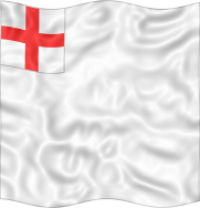 1) 1) |
| Active | 1642-5, 1648 |
| Country | England |
| Allegiance | Royalist |
| Conflicts | First Civil War |
| Second Civil War | |
| Type | Foot |
| Colonel | Richard Bolle |
| Sir George Lisle | |
| Area Raised | Staffordshire (1642) |
| Marches (1645) | |
| Essex (1648) | |
| Coat Colour | Red or Blue |
| Flag Colour | White |
| Flag Design | Unknown |
| Field Armies | Oxford 1642-5 |
| Lucas 1648 |
Later Sir George Lisle's Regiment of Foot
Royalist regiment of foot of the Oxford Army, raised by Bolle for Lord Paget
Service History
1642
- August: Commissioned to be raised in Staffordshire
- August: Raised in Lichfield area
- September: Join the King's army
- October: Quartered at Wornill (Woodhill?), Shropshire
- 23rd October: Battle of Edgehill
- 13th November: Standoff at Turnham Green
- 9th December: Quartered at Reading
1643
- Garrison of Reading
- 13th - 27th April: Besieged at Reading
- May: Quartered at Culham Camp
- 26th July: Storm of Bristol
- 3rd August to 5th September: Siege of Gloucester
- 20th September: First Battle of Newbury
- September: Quartered at Reading
- November: Sent south to reinforce Hopton
- 13th December: Battle of Alton Church: Bolle killed in action
1644
- Lisle brought in from Oxford to take over the regiment
- Quartered in Reading
- 29th March: Battle of Cheriton. Probably just a detachment, as Lisle's force consisted of 'commanded men' from the Reading garrison
- 10th April: Mustered at Aldbourne Chase
- 8th-18th June: Garrison of Abingdon 2)
- 11 June: Battle of Tipton Green. Possibly some of Lisle's own soldiers were part of the commanded musket detachment he took to support the King in his 'night march' to the south Midlands; most of the regiment must have remained at Oxford, as it was briefly sent to garrison Abingdon (see above)
- 29th June: Battle of Cropredy Bridge
- August: Battle of Lostwithiel
- 27th October: Second Battle of Newbury
- 23rd November: Garrison of Faringdon
1645
- Jan-early May: Garrison of Faringdon
- 29th-30th April: Defence of Faringdon
- 31st May: Storm of Leicester
- 14th June: Battle of Naseby; regiment destroyed
- July: new regiment of 500 planned;3) 150 men sent to Bristol in July, these may have been all that were raised. It is not clear if Lisle was with them.
1648
- June: Lisle probably took command of some Kent recruits as his 'regiment'
- June: Taking of Braintree
- June: Taking of Colchester
- June to August: Besieged at Colchester
- August: Surrender at Colchester
Notes
No detail is known of any troops raised or led by Lisle in 1648, although he was known to have been buying horses and arms in London in 1647 or 1648 4); an indigent cavalry officer from Essex who in 1663 claimed Lisle as his commander, must have served in 1648 as Lisle did not command cavalry during the First Civil War. 5) Mentions of his 'regiment' during the Second Civil War probably refer to raw Kent recruits put under his command during the uprising, and subsequently at Colchester.
Articles concerning the history of the regiment are available online at Sir George Lisle's Regiment of Foote website.
Coats, Flags and Equipment
Clad in either all red or all blue suits of coats, breeches and montero hats in July 1643 along with the other Royalist foot regiments then in Oxford 6). Symonds noted that Lisle's carried white colours in April 1644 7).
Notable Officers
Stuart Reid offers a list of the regiment's officers in Officers and Regiments of the Royalist Army (Partizan Press). A fuller examination is given in No Armour But Courage - Colonel Sir George Lisle, 1615-1648, Serena Jones, Helion & Company: 2016.
Lord Paget
Richard Bolle
Sir George Lisle
Strength
- September 1642: Said to be 1000 to 1300
- November 1642: Muster 534 men after losses at Edgehill
- April 1644: 203 at Reading
- April 1644: At Aldbourne Chase mustered 6 Captains, 7 Lieutenants, 8 Ensigns, 7 Gentlemen, 17 Sergeants, 22 Corporals, 14 Drummers, 189 Soldiers 8)
- June 1645: Probably not much more than 100, as Lisle's entire Oxford tercio only numbered 500 at Naseby.
See Also
Links
The regiment are re-enacted by Sir George Lisle's Regiment of Foote of the Sealed Knot.