Table of Contents
Sir Thomas Fairfax’s Regiment of Foot
| Flag Illustration | 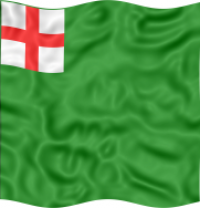 1) 1) |
| Active | 1645 to 1660 |
| Country | England |
| Allegiance | Parliamentarian |
| Conflicts | First Civil War |
| Second Civil War | |
| Third Civil War | |
| 1st Anglo-Dutch War | |
| Type | Foot |
| Marines | |
| Colonel | Sir Thomas Fairfax |
| Oliver Cromwell | |
| William Goffe | |
| Edmund Ludlow | |
| Herbert Morley | |
| Earl of Peterborough | |
| Area Raised | |
| Coat Colour | Red lined Blue |
| Flag Colour | Green? |
| Flag Design | Unknown |
| Field Armies | NMA 1645-6 |
| Cromwell 1648 | |
| Cromwell 1650-1 | |
Later Oliver Cromwell’s, Colonels William Goffe, Herbert Morley, Edmund Ludlow and The Earl of Peterborough’s Regiment of Foot
The senior New Model Army regiment of foot, serving in the First, Second and Third Civil Wars and as Marines in the First Anglo-Dutch War
Service History
1645
- April: Formed from the Earl of Manchester’s Regiment of Foot and the Earl of Essex’s Regiment of Foot
- 14th June: Battle of Naseby
- June: Siege of Leicester
- July: Battle of Ilminster (musket det)
- July: Battle of Langport
- July: Siege of Bridgewater
- August to September: Siege of Bristol
1646
- 16th February: Battle of Torrington
- May to June: Siege of Oxford
- May to July: Siege of Wallingford
1647
- May: Refuse to disband
1648
- Join Lambert at Catterick
- 17th - 18th August: Battle of Preston
- August: Battle of Winwick Pass
- September: Taking of Berwick
1649
- Quartered in London
1650
- Regiment passes from Fairfax to Cromwell
- July: Invade Scotland under Cromwell
- 3rd September: Battle of Dunbar
- September: Lt Col Goffe promoted to Colonel
- September to December: Siege of Edinburgh Castle
1651
- January: Attempt to take Burntisland (det)
- 3rd September: Battle of Worcester
1652
- June to 1654: Detachments employed on board the fleet as marines in the First Anglo-Dutch War
1653
- December: Goffe clears out the House of Commons with two files of musketeers when the Nominated Assembly (Barebones Parliament) surrenders its powers to Cromwell.
1654
1655
- August: Goffe made Major General of Bedford, Sussex and Southampton
- The regiment referred to as His Highness’s therefore likely under Cromwell’s command again
1656
1657
- Goffe re-appointed Colonel
1658
1659
- April: The regiment supports Fleetwood
- Goffe cashiered and the regiment given to Ludlow temporarily
- July: Herbert Morley made Colonel as Ludlow takes up his post in Ireland
- October: Morley removed after opposing Lambert, then re-appointed by Parliament
1660
- August: Earl of Peterborough becomes Colonel on Monck’s orders
- November: Disbanded at Reading
Notes
A history of the regiment is given in The Regimental History of Cromwell's Army by Sir Charles Firth and Godfrey Davies, Clarendon Press, Oxford, 1940.
The regiment was formed from Manchester’s Regiment of Foot and probably Essex’s regiment of foot as the General’s Regiment of the New Model Army. Victorious at Naseby, they particularly distinguished themselves in breaking the last of the Royalist foot. They went on to fight in the Western campaign and served at the sieges of Oxford and Wallingford.
At the start of the Second Civil War the regiment were sent North by Fairfax, joining Lambert, then Cromwell, for the Preston Campaign. In 1650, with Fairfax’s resignation, the regiment passed to Cromwell, fighting with distinction at Dunbar. Goffe was promoted to Colonel in place of Cromwell and led the regiment until 1655, when it probably reverted back to Cromwell. In the meantime detachments had served as marines with the fleet during the First Anglo-Dutch War.
By 1658 Goffe was re-appointed Colonel, being replaced successively by Ludlow, Morley and the Earl of Peterborough during the Restoration crisis. The regiment were finally disbanded in November 1660 at Reading.
Coats, Flags and Equipment
Red coats. On the 23rd of April 1645 Fairfax’s regiment were provided with funds to buy 10 new colours. The colour of the flags was not noted, though blue or green have been proposed. There is a quote from a contemporary news-sheet Sir Thomas Fairfaxes colours are blew (Perfect Passages April 1645), but this could equally well refer to Fairfax’s regiment of horse or his favoured sash or ribbon colour for the army. Blue was also the colour associated with Tom Fairfax during the First Civil War, referred to by his uncle Charles. In May 1647 Levellers from the regiment called themselves souldiers of the Greene regiment of foot. This very probably refers to the colour of their flags.
Notable Officers
Sir Thomas Fairfax
Sir Thomas Fairfax Leading Parliamentarian general of the First and Second Civil Wars and Lord-General of the New Model Army. He refused to fight against Charles II in the Third Civil War and supported the Restoration.
Oliver Cromwell
Oliver Cromwell Rose from obscurity to become the most successful military and political leader of the Civil Wars. Lord Protector of England from 1654-8, he was offered—and refused—the Crown itself.
Colonel William Goffe
William Goffe Radical army officer, regicide and Major-General who escaped to New England at the Restoration and became part of colonial folklore.
Colonel Edmund Ludlow
Edmund Ludlow Religious radical, republican and regicide who bitterly opposed Cromwell's elevation as Lord Protector and was the last surviving adherent of the “Good Old Cause”.
Colonel Herbert Morley
Earl of Peterborough
Sergeant-Major White
Strength
- 1645: Established at 1000 men in ten companies (probably not up to strength)
- 1656: Ordered to be recruited up to 1200 men
See Also
Links
Fairfax's Regiment is re-enacted by Sir Thomas Fairfax's Regiment of Foote of the Sealed Knot.
The Fairfax Battalia of the English Civil War Society has an article on the regiment in their regimental wiki.