Table of Contents
Sir John Reynolds’ Regiment of Foot
| Flag Illustration | 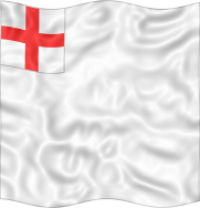 1) 1) |
| Active | 1657 to 1662 |
| Country | England |
| Allegiance | Parliamentarian |
| Conflicts | Anglo-Spanish War |
| Type | Foot |
| Colonel | Sir John Reynolds |
| Sir William Lockhart | |
| Edward Harley | |
| Lord Rutherford | |
| Area Raised | England |
| Coat Colour | Red |
| Flag Colour | White |
| Flag Design | |
| Field Armies | Turenne 1657-8 |
| Morgan 1658-9 | |
Later Sir William Lockhart's, Colonel Edward Harley's, then Lord Rutherford's Regiment of Foot
Protectorate regiment of foot serving in Flanders, notably at the Battle of the Dunes, then going into garrison at Dunkirk
Service History
1657
- April: Raised in England
- May: Land at Boulogne
- June to August: Siege of Montmedy
- August: Storm of St Venant
- August: Relief of Ardes
- September: Siege of Mardyke?
- October: Defence of Mardyke
- December: Reynolds drowned at sea, replaced by Lockhart
1658
- May to June: Siege of Dunkirk
- June: Battle of the Dunes
- Garrison Dunkirk
1659
- Garrison Dunkirk
1660
- Garrison Dunkirk
- May: Harley succeeds Lockhart
1661
- Garrison Dunkirk
- May: Rutherford succeeds Harley
1662
- Garrison Dunkirk
- November: Disbanded at Dunkirk
- Remaining soldiers shipped to Tangiers
Notes
A history of the regiment is given in The Regimental History of Cromwell's Army by Sir Charles Firth and Godfrey Davies, Clarendon Press, Oxford, 1940
Reynolds’ regiment were raised in England in 1657 for service in Flanders. Shipped to Flanders in 1657 they joined Turenne’s army and served at St Venant, Mardyke and the siege of Dunkirk. In December 1657 Reynolds was drowned at sea on his way to England and the regiment was handed over to Lockhart. Under Lockhart’s command the regiment was instrumental in securing victory at the Battle of the Dunes. Colonel Drummond wrote to Monck that regiment has done what I have never seen done before, for they charged and beat a Spanish regiment off a hill more steepe than any ascent of a breech than I have seen. Lt Col Fenwick was mortally wounded in the battle. Subsequently the regiment went into garrison at Dunkirk where they remained until 1662. In November 1662 Charles II disbanded the regiment and the remaining soldiers were shipped to Tangier where they were eventually incorporated into the 'Old Tangier' Regiment. The Old Tangier Regiment became the Second, or Queen’s Regiment of Foot, the senior English Regiment of the line in the British army, where it has now been amalgamated into the Princess of Wales’s Royal Regiment.
Coats, Flags and Equipment
Red coats. Known as the white regiment in Flanders, this almost definitely refers to the field colour of their flags2).
Notable Officers
Sir John Reynolds
Sir William Lockhart
Edward Harley
Andrew, Lord Rutherford
Strength
- June 1658: 728 private soldiers after the Battle of the Dunes